
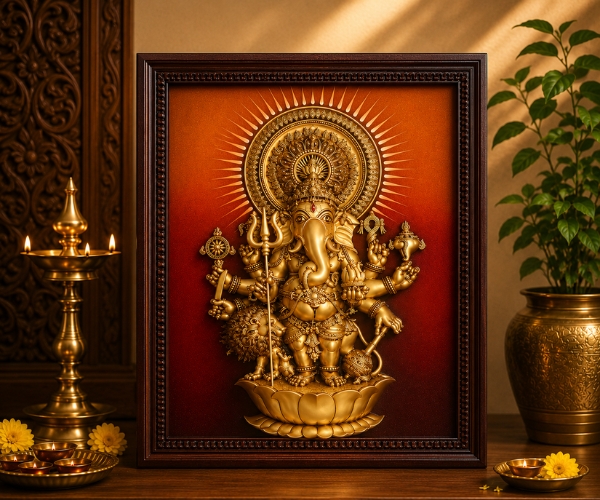
For many, bringing a Ganesh idol into a home is a deeply personal milestone, often associated with new beginnings and the seeking of protection. While modern advice frequently focuses on the technicalities of Vastu or the physical placement of the deity within a room, the cultural significance of the idol runs much deeper. In the classical Indian tradition, an idol is not merely a decorative object or a lucky charm; it is a “Vigraha”, a physical form that holds the vast, formless energy of the divine, acting as a constant spiritual anchor for the household.
The Living Presence of the Grahapati
In the ancient Shastras, Ganesha is often referred to as Grahapati, or the Lord of the Household. This title suggests a relationship that goes far beyond ritualistic worship. The presence of the idol signifies that the home is a sacred space where wisdom, intellect, and emotional balance are prioritised. When a family chooses an idol for their home, they are essentially inviting a specific quality of consciousness into their daily lives. The sight of the deity serves as a visual “Smarana”, a reminder to approach daily challenges with the same equanimity and steady intellect that Ganesha embodies.
The Symbolism of the Household Form
The specific iconography chosen for a home idol often reflects the aspirations of the family. While temple idols might be towering and awe-inspiring, home idols are traditionally more intimate and “Soumya”, or gentle. A seated Ganesha, known as Lalanasana, is a popular choice for the home because it represents a state of calm, meditative repose. This posture suggests that the deity is “settled” within the house, bringing a sense of permanence and stability to the family unit. The large belly of the idol, often seen as a symbol of prosperity, carries a deeper cultural meaning: the capacity to peacefully digest all the ups and downs of domestic life, ensuring that the household remains resilient in the face of change.
The Ritual of Connection
The cultural significance of a home idol is also found in the daily interactions it inspires. In Indian heritage, the “Prana Pratishtha”, or the infusion of life force into the idol, transforms it from a piece of craftsmanship into a member of the family. This relationship is maintained through simple, daily acts of devotion, the lighting of a lamp, the offering of a fresh flower, or a moment of silent reflection before leaving the house. These small rituals create a rhythmic discipline within the home, grounding the inhabitants and providing a sense of continuity that links the present generation to the traditions of their ancestors.
Beyond the Physical Form
Ultimately, the significance of a Ganesh idol in the home lies in its ability to bridge the gap between the mundane and the sacred. It stands as a silent witness to the family’s growth, its struggles, and its triumphs. By adhering to the classical proportions and symbolic details of the Shastras, a well-crafted idol becomes a masterpiece of “Shilpa” that elevates the aesthetic and spiritual vibration of the living space. It is a reminder that a home is not just made of bricks and mortar but of the values, wisdom, and heritage that we choose to house within it.